Industrial Hot Water Pressure Washing: When and Why to Use It
When and Why to Use Industrial Hot Water Pressure Washing
The difference between an industrial surface that looks clean and one that is truly decontaminated often comes down to temperature. While standard cold-water units are suitable for clearing away loose dirt or dust, they often fall short when faced with the complex residue profiles found in heavy manufacturing and food processing. Industrial hot-water pressure washing is essential for facilities that deal with molecular-level bonds between contaminants and equipment. Understanding when and why to deploy heat is the key to maintaining operational efficiency and safety.
Why Hot Water Pressure Washing Matters in Industrial Cleaning
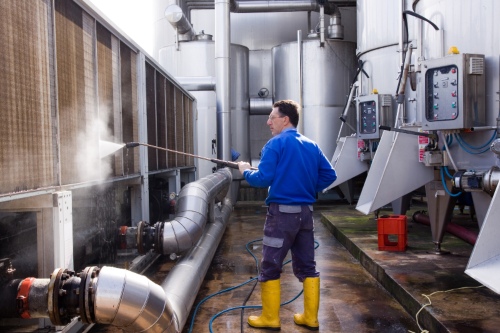
Industrial environments are breeding grounds for stubborn substances. From the carbonized grease on a production line to the thick hydraulic fluids in an automotive plant, these contaminants are designed to resist breakdown. Cold water simply pushes these oils around, often spreading the mess rather than removing it. Hot water pressure washing works on a molecular level by reducing the viscosity of fats and oils. By introducing heat, the thermal energy breaks the chemical bonds of the grime, allowing the high-pressure stream to lift and flush away debris that would otherwise remain trapped in the microscopic pores of concrete or metal surfaces.
When to Use Hot Water Pressure Washing
Choosing when to use hot water pressure washing depends largely on the “T.A.C.T” principle of Temperature, Agitation, Chemical, and Time. If you are dealing with any of the following, hot water is the superior choice:
- Grease and Oil Mitigation – For engine rooms, garages, and refineries, heat is essential for industrial grease removal.
- Sanitization Needs – In food processing plants, hot water helps kill bacteria and pathogens while melting away sugars and proteins.
- Heavy Equipment Maintenance – Removing caked-on mud mixed with oil from earth-moving machinery.
- Surface Preparation – Before applying industrial coatings or epoxy floors, surfaces must be completely free of oils to ensure proper adhesion.
Why Choose Hot Water Pressure Washing?
Industrial cleaning needs speed and thoroughness that can often only be found through hot water pressure washing. Cold-water washing methods take much longer to successfully clean industrial environments, leading to more downtime for critical machinery and higher labor costs. Furthermore, heat acts as a natural catalyst, allowing you often to achieve a superior clean with fewer harsh chemical detergents, making it a more environmentally friendly option for large-scale hot-water pressure cleaning in factories.
Industrial Environment Hot Pressure Washing Benefits
Hot pressure washing offers immediate results and advantages. Some of the many benefits of integrating heat into your industrial pressure washing maintenance schedule include:
- Superior Degreasing – Heat melts petroleum-based products instantly.
- Reduced Drying Time – Hot surfaces evaporate moisture faster, allowing facilities to return to service sooner.
- Enhanced Sanitation – High temperatures assist in disinfecting surfaces without relying solely on biocides.
- Cost Efficiency – While the equipment is more complex, the reduction in labor hours and chemical usage provides a high return on investment.
Contact FCS Industrial Solutions
FCS Industrial Solutions provides comprehensive commercial hot water pressure washing services tailored to the specific needs of your industry. Our teams utilize industrial-grade heating elements capable of reaching temperatures that dissolve even the most caramelized food byproducts and stubborn powder coatings. By combining specialized tools with trained expertise, we ensure your infrastructure is cleaned to the highest standards without compromising the integrity of sensitive sensors or delicate refractory linings. Reach out today to schedule services.
FAQs
Is Hot Water Pressure Washing Safe for All Industrial Surfaces?
Most industrial surfaces like steel, concrete, and heavy-duty masonry handle heat well. Care must be taken with certain plastics, seals, and sensitive electronics.
How Hot Does the Water Get in Industrial Units?
Typically, these systems heat water to between 180°F and 200°F. In some cases, wet steam (up to 300°F) is used for specific sterilization or heavy degreasing tasks.
Does Hot Water Pressure Washing Require More Maintenance Than Cold Water?
Yes, the heating coils and burners require regular inspection to ensure safety and efficiency, which is why professional service is often preferred over in-house management.
Can I Use Hot Water Pressure Washing to Remove Graffiti?
Yes, heat is exceptionally effective at softening paint and adhesives, making it a go-to method for restoring industrial exteriors.
How Often Should We Schedule Hot Water Pressure Cleaning?
Food-grade facilities may require daily or weekly cleaning, while heavy manufacturing might integrate it into a quarterly or bi-annual maintenance cycle.