Confined Space Cleaning Safety Requirements
Confined space cleaning is among the most high-risk operations in industrial maintenance, requiring rigorous adherence to safety protocols to prevent catastrophic incidents. Cleaning tanks, silos, pits, or boilers involves navigating environments that aren’t designed for continuous human occupancy and often have limited means of entry and exit. FCS Industrial Solutions offers a guide on the confined space cleaning safety requirements every facility should know.
Why Is Confined Space Cleaning Safety an Issue?
Confined space cleaning goes beyond pressure washing and simple safety steps. The combination of limited ventilation and the potential for hazardous substance accumulation in confined spaces means that even minor procedural lapses can lead to fatal outcomes. Consequently, facilities must implement a comprehensive safety management system that prioritizes risk mitigation and strict regulatory compliance to safeguard personnel and maintain operational integrity.
Common Confined Space Cleaning Hazards and Risks
The first step toward effective risk management is identifying confined space cleaning hazards and risks. These can include:
- Atmospheric Instability – The accumulation of toxic gases, such as hydrogen sulfide or carbon monoxide, alongside oxygen deficiency or enrichment, poses immediate life-safety threats.
- Chemical Exposure – Contact with corrosive cleaning agents or the volatile organic compounds (VOCs) released during the agitation of residual sludge can cause severe dermatological and internal injuries.
- Engulfment and Entrapment – Inadvertent release of liquids or free-flowing solids into the workspace can lead to rapid immersion or mechanical crushing.
- Ignition of Flammable Vapors – The introduction of electronic tools or static-producing equipment into environments containing combustible dust or vapors increases the risk of catastrophic fires or explosions.
- Physical and Ergonomic Obstructions – Limited ingress and egress points, combined with low-light conditions and cramped configurations, significantly hinder emergency evacuation and increase the likelihood of musculoskeletal strain.
Key Confined Space Cleaning Safety Requirements
To ensure confined space cleaning compliance requirements are met, facilities must adhere to OSHA standards (such as 29 CFR 1910.146) and other relevant regional regulations. These requirements mandate the implementation of a written permit-required confined space (PRCS) program. To ensure comprehensive compliance and operational safety during confined space cleaning, facilities must implement the following mandatory measures:
- Regulatory Adherence – Maintain strict alignment with OSHA standard 29 CFR 1910.146 and all applicable regional statutory requirements.
- Written PRCS Program – Establish and enforce a formal permit-required confined space program that outlines specific entry protocols and safety benchmarks.
- Space Identification – Ensure the permanent and visible labeling of all designated confined spaces to prevent unauthorized or uninformed entry.
- Atmospheric Verification – Utilize precision-calibrated monitoring equipment to continuously assess oxygen levels and detect the presence of toxic or combustible gases.
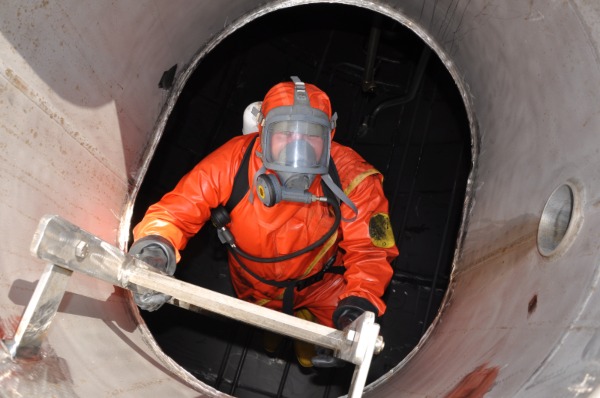
- PPE Provision – Supply and maintain specialized personal protective equipment tailored to the specific chemical and physical hazards of the space.
- Energy Isolation – Execute rigorous Lockout/Tagout (LOTO) procedures to neutralize all electrical, hydraulic, and pneumatic energy sources before personnel entry.
Confined Space Entry Cleaning Rules
Strict adherence to confined space entry cleaning rules is non-negotiable for site safety. These include:
- No individual may enter a permitted space without a valid, signed entry permit that specifies the scope of work, duration, and authorized personnel.
- A dedicated “Attendant” must always remain outside the entrance, maintaining constant communication with the “Entrants” and monitoring for any signs of distress or environmental changes.
- The “Entry Supervisor” must verify that all pre-entry conditions, such as atmospheric testing and ventilation, have been satisfied and that a rescue team is either on-site or immediately available.
How to Safely Clean Confined Spaces Step by Step
Understanding how to safely clean confined spaces requires a systematic approach to mitigate risks at every stage of the process. This includes:
- Preparation and Evaluation – Conduct a thorough hazard assessment and secure the necessary permits.
- Isolation – Implement LOTO procedures and blanking/blinding of pipes to isolate the space from external hazards.
- Ventilation and Testing – Use industrial blowers to purge the air and utilize multi-gas monitors to verify safe oxygen and toxicity levels.
- Cleaning Execution – Utilize non-sparking tools and specialized equipment, such as vacuum trucks or hydro-blasting systems, to remove contaminants efficiently.
- Continuous Monitoring – Maintain active atmospheric monitoring and ventilation throughout the entire duration of the cleaning process.
- Final Inspection and Exit – Conduct a post-cleaning inspection, ensure all tools are removed, and formally close the entry permit.
Training Requirements for Confined Space Cleaning
Comprehensive confined space cleaning training requirements ensure that every team member is equipped with the knowledge to recognize hazards and respond to emergencies. Training must be specific to the roles of Entrant, Attendant, and Supervisor, covering topics such as PPE usage, atmospheric monitor calibration, and non-entry rescue techniques. Refresher training is required whenever there is a change in confined space operations or if an employee demonstrates a lack of proficiency.
FCS Industrial Solutions Supports Safe Cleaning
FCS Industrial Solutions provides elite-level expertise in confined space cleaning safety to Alabama, Georgia, Kentucky, Maryland, North Carolina, Ohio, Pennsylvania, South Carolina, Tennessee, West Virginia, and the District of Columbia. Our team of highly trained professionals utilizes state-of-the-art technology and adheres to the most stringent safety standards to execute projects in the most challenging environments. By partnering with FCS, facilities can mitigate liability, ensure full regulatory compliance, and guarantee that their critical infrastructure is cleaned with precision and an unwavering commitment to personnel safety. Contact us today.
FAQs
What Defines a Confined Space During a Cleaning Project?
A confined space is any area large enough for an employee to enter, has limited means for entry or exit, and is not designed for continuous occupancy.
How Often Should Atmospheric Testing Be Conducted?
Atmospheric testing must be performed before entry and monitored continuously throughout the cleaning process to detect any sudden changes in air quality.
Is a Standby Rescue Team Required for All Confined Space Cleanings?
Yes, for permit-required confined spaces, a rescue plan must be in place, and a designated rescue team must be available to respond immediately to emergencies.
Can One Person Perform a Confined Space Cleaning Alone?
No. Safety regulations require a minimum of two people, including an Entrant to perform the cleaning and an Attendant to monitor the entry from the outside.
What Is the Most Common Hazard in Confined Space Cleaning?
Atmospheric hazards, including oxygen deficiency and toxic gas exposure, are the leading causes of fatalities in confined space incidents.